Generate AI-optimized articles and publish them to multiple platforms to boost your visibility in AI search. The most efficient solution to improve your GEO.
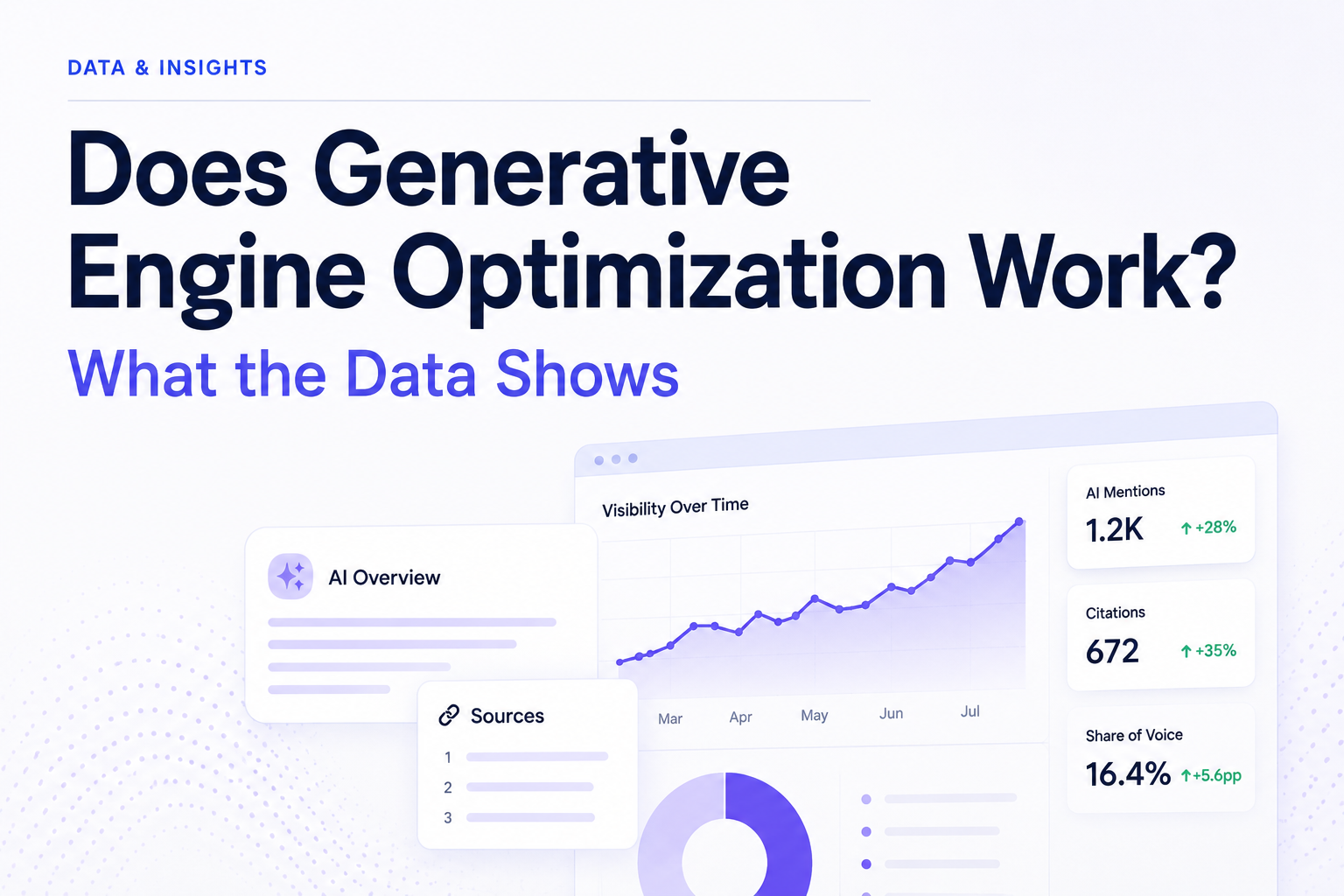
Does Generative Engine Optimization Work? What the Data Shows
Several peer-reviewed and preprint studies now provide empirical data on GEO effectiveness. The landmark 2024 study by Aggarwal et al. (“GEO: Generative Engine Optimization”) tested nine optimization methods across 10,000 queries. Key findings: Citation rate improvement: GEO-optimized content saw a median visibility increase of 30–40%, with top-performing techniques achieving up to 115% improvement. Most effective single technique: Adding relevant statistics and citations to authoritative sources. Least effective technique: Keyword stuffing and unnatural repetition, which sometimes decreased citation rates. Domain dependence: Results varied significantly. Historical and factual queries responded best to quotation-based optimization. Procedural queries responded best to structured, step-by-step formatting. A follow-up study by Patel and Zhang (2024) examined Google AI Overviews specifically: ...
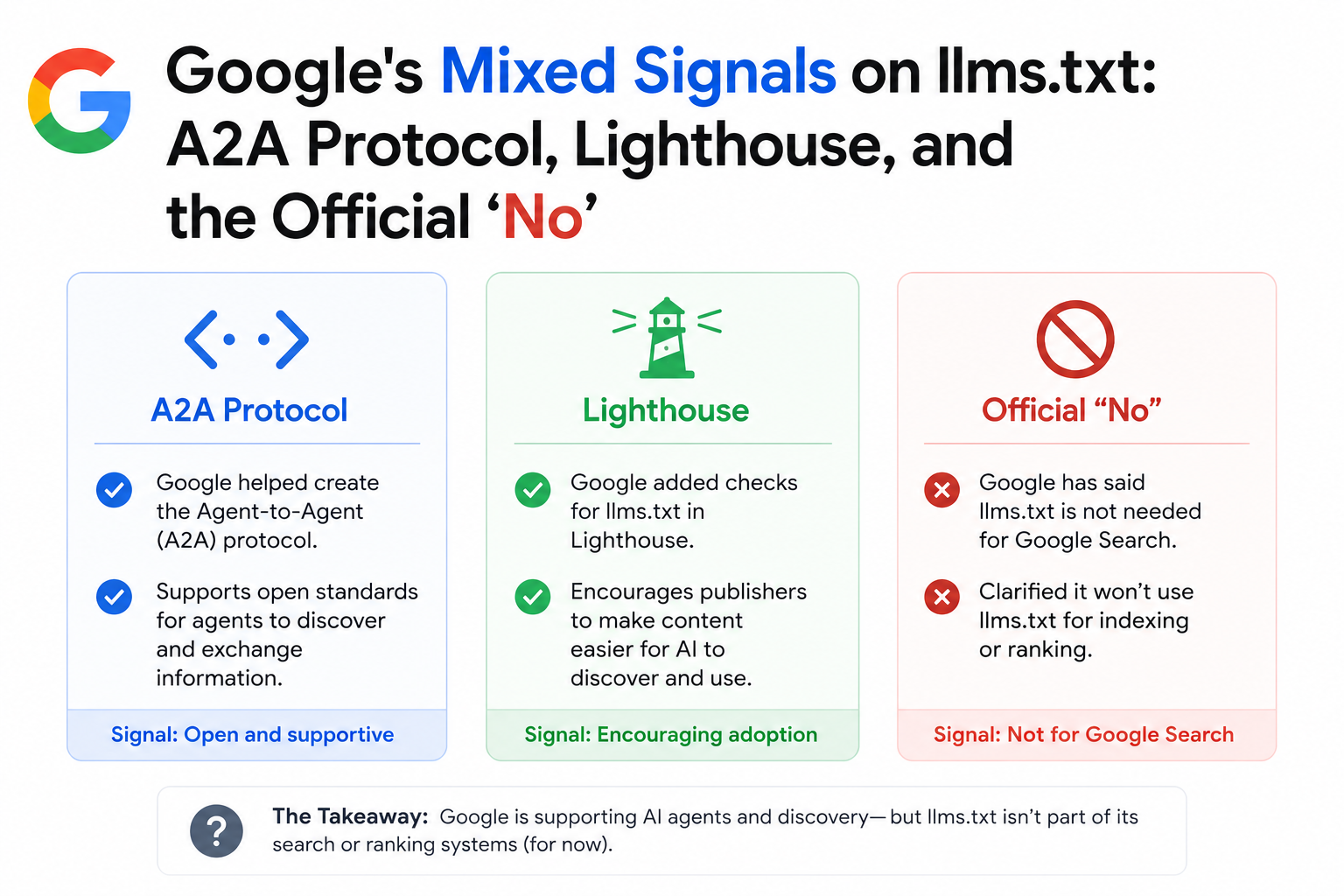
Google's Mixed Signals on llms.txt: A2A Protocol, Lighthouse, and the Official 'No'
Introduction Google’s position on llms.txt is a study in contradiction. On one hand, Gary Illyes told the world Google has “no plans to support LLMs.txt.” John Mueller compared it to the keywords meta tag on Reddit—the SEO equivalent of calling something a relic. On the other hand, Google included llms.txt in its Agent-to-Agent (A2A) protocol by May 2026, built llms.txt files for Gemini, Chrome, Firebase, and Flutter, and folded it into Lighthouse audits. You can’t blame anyone for being confused. This article unpacks exactly what Google has said, what it has done, and how to interpret the gap between the two. ...
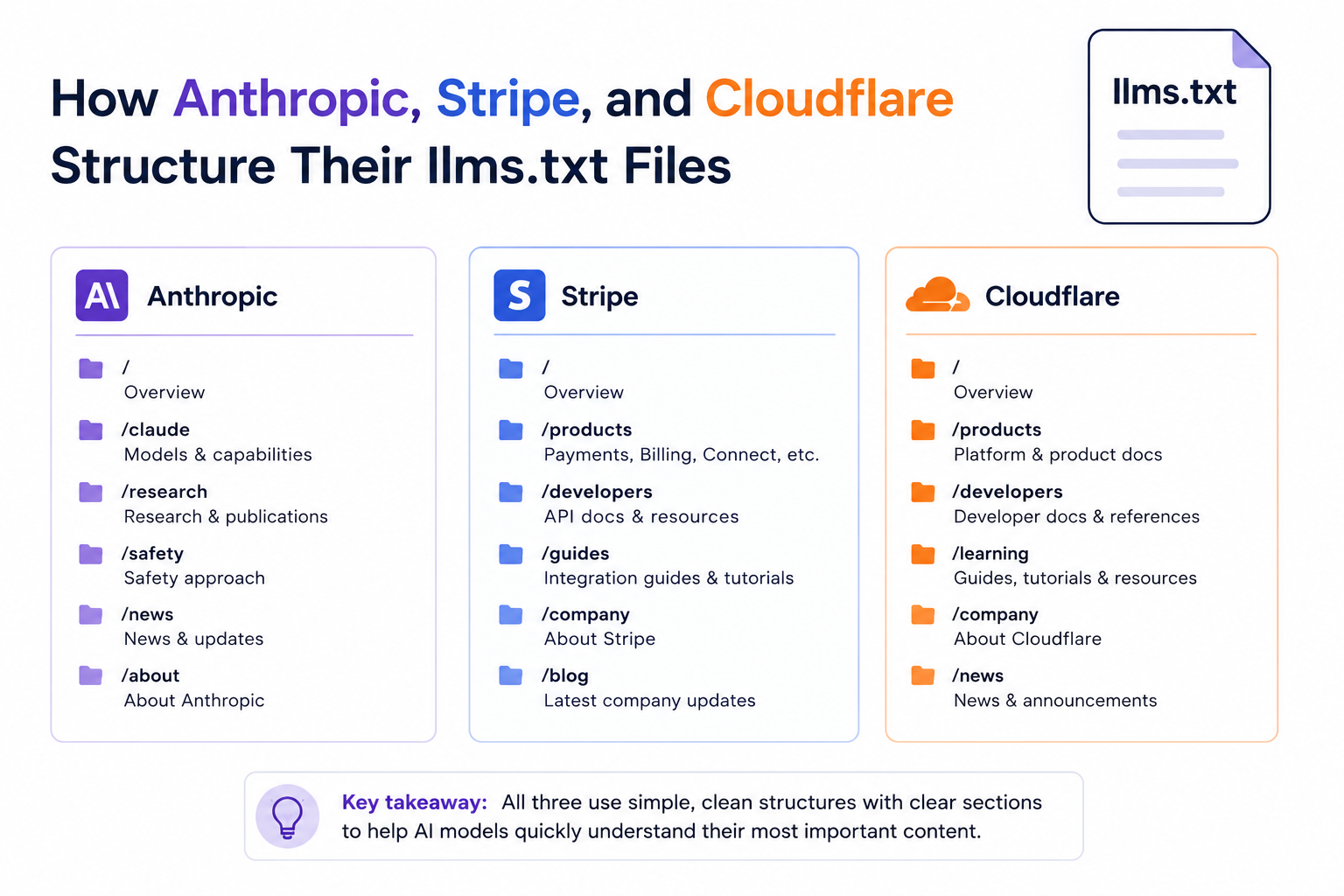
How Anthropic, Stripe, and Cloudflare Structure Their llms.txt Files
Anthropic, Stripe, and Cloudflare each structure their llms.txt files differently — their design decisions reveal what the spec actually enables when you move past a minimal viable file. Most llms.txt discussions fixate on whether the standard works. That misses something more useful: the companies pushing hardest for AI-readable content are already publishing production-grade implementations. Anthropic ships a dual-file powerhouse with both a curated index and a complete reference. Stripe organizes by product categories with optional guardrails. Cloudflare goes modular, publishing separate file pairs for each product line. Studying their files teaches you more about structuring your own than any generic template. Here’s exactly how they built theirs, what they prioritized, and which trade-offs they accepted. ...
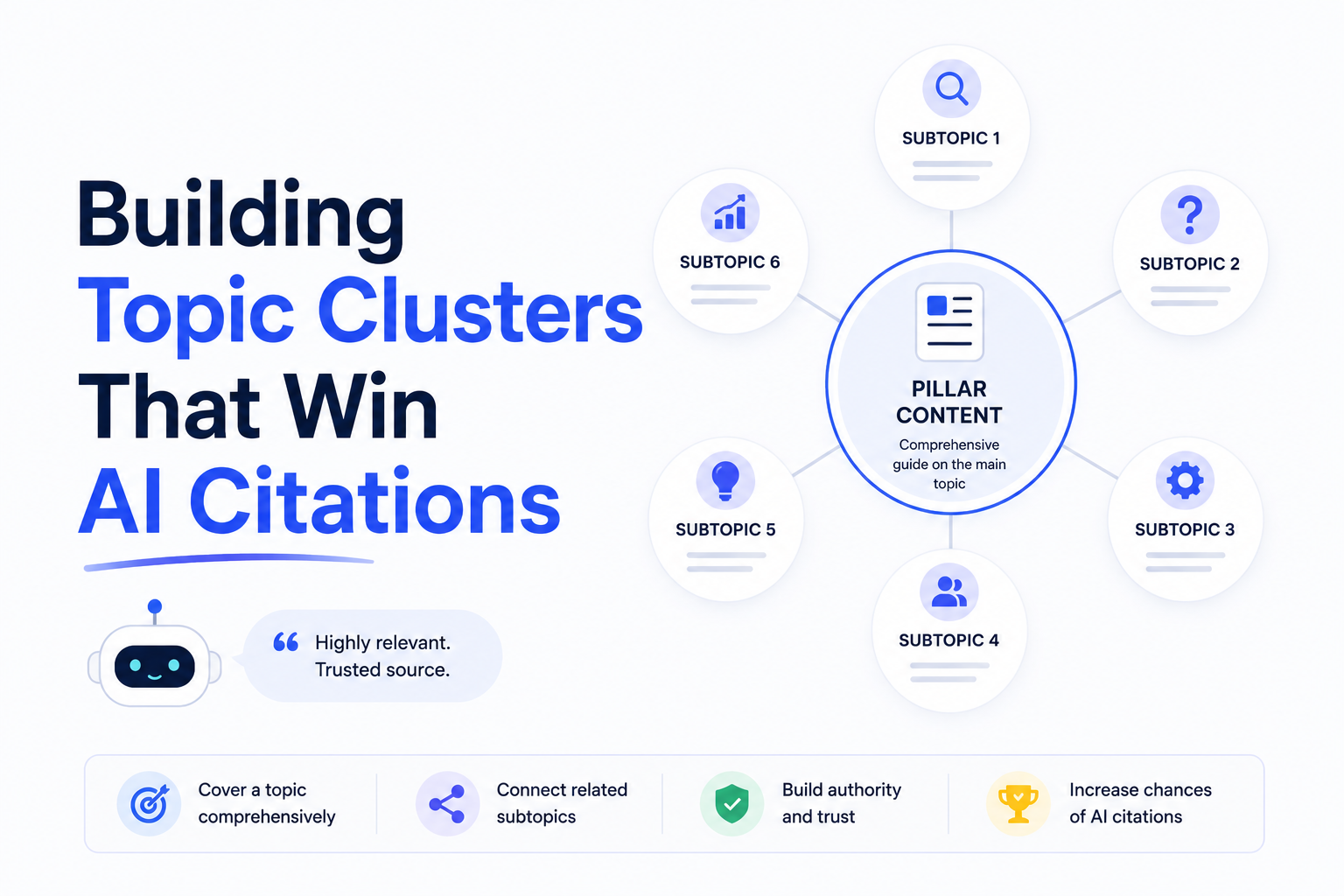
Building Topic Clusters That Win AI Citations
Introduction AI models don’t rank pages. They pick sources. When ChatGPT or Perplexity builds an answer, it scans for the most authoritative, comprehensive source available on a given subject. Single pages rarely win that selection. Topic clusters do. A topic cluster is a network of interlinked pages covering a subject from multiple angles—a central pillar page supported by cluster content that goes deep on subtopics. Search engines have rewarded this structure for years. But AI models now make it non-negotiable. Without clusters, your content looks shallow. With them, you signal mastery that AI models trust. ...
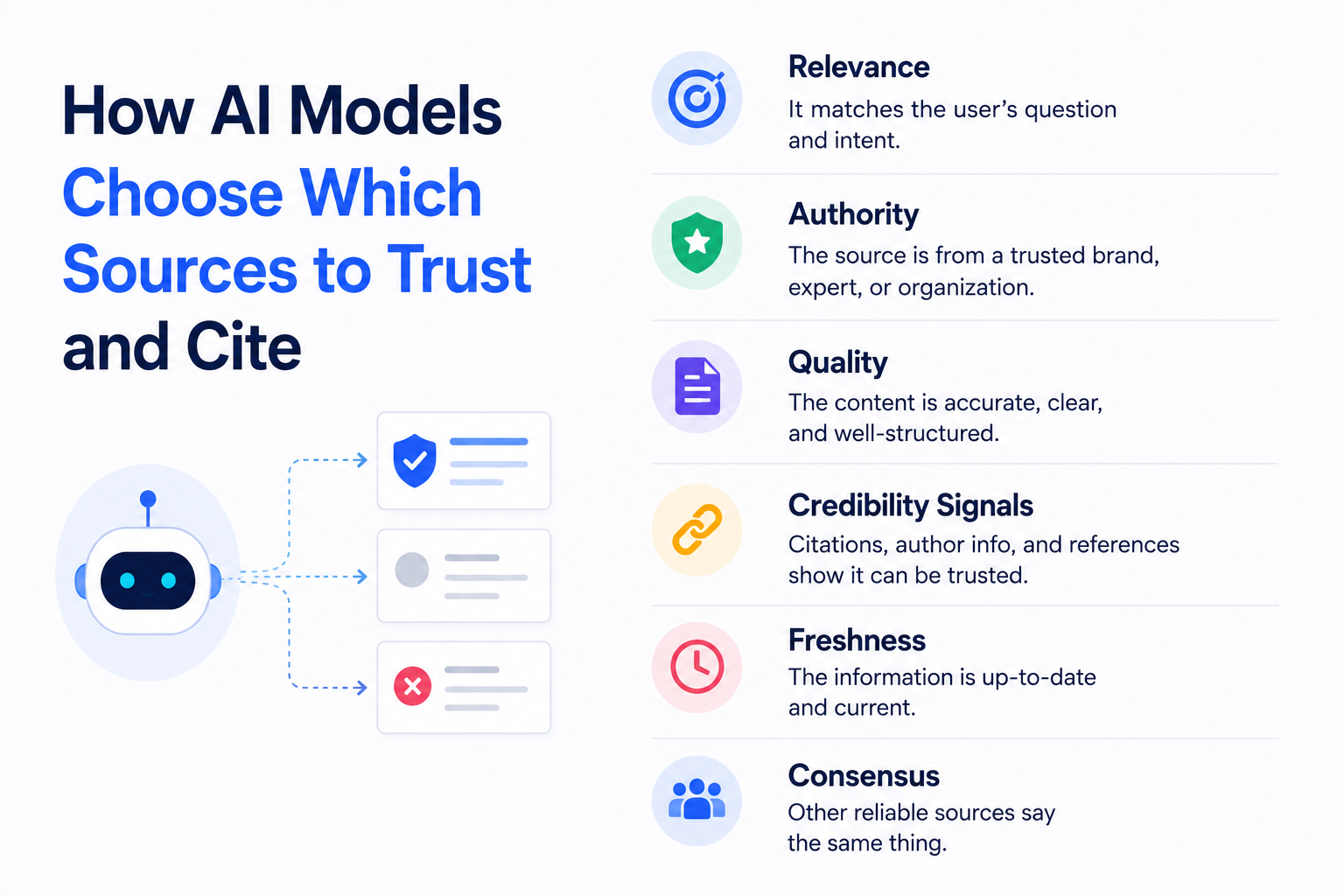
How AI Models Choose Which Sources to Trust and Cite
AI models choose which sources to trust and cite by evaluating five core signals: factual density, structural clarity, topical authority, recency, and source reputation—all in fractions of a second. During training, models absorb patterns from billions of documents, giving more weight to academic papers, government databases, and established publications. At query time, they retrieve with intent, hunting for the exact answer to a specific question rather than crawling blindly. Yet plenty of accurate pages still get skipped—usually because the answer is buried behind fluff, poorly formatted, or missing context. The good news? These are fixable problems. ...
How to Audit Your Website Content for AI Readability
Introduction You can’t improve what you don’t measure. An AI readability audit shows you exactly what a language model sees when it lands on your site. Before you write an llms.txt file — or restructure your docs for AI consumption — you need to know what an LLM actually encounters. That picture is often uglier than you think. What AI Readability Actually Means Traditional readability scores measure human comprehension—Flesch-Kincaid grade levels, sentence length, word complexity. AI readability is different. It measures how efficiently a language model can locate, extract, and interpret your content given a fixed context window. ...
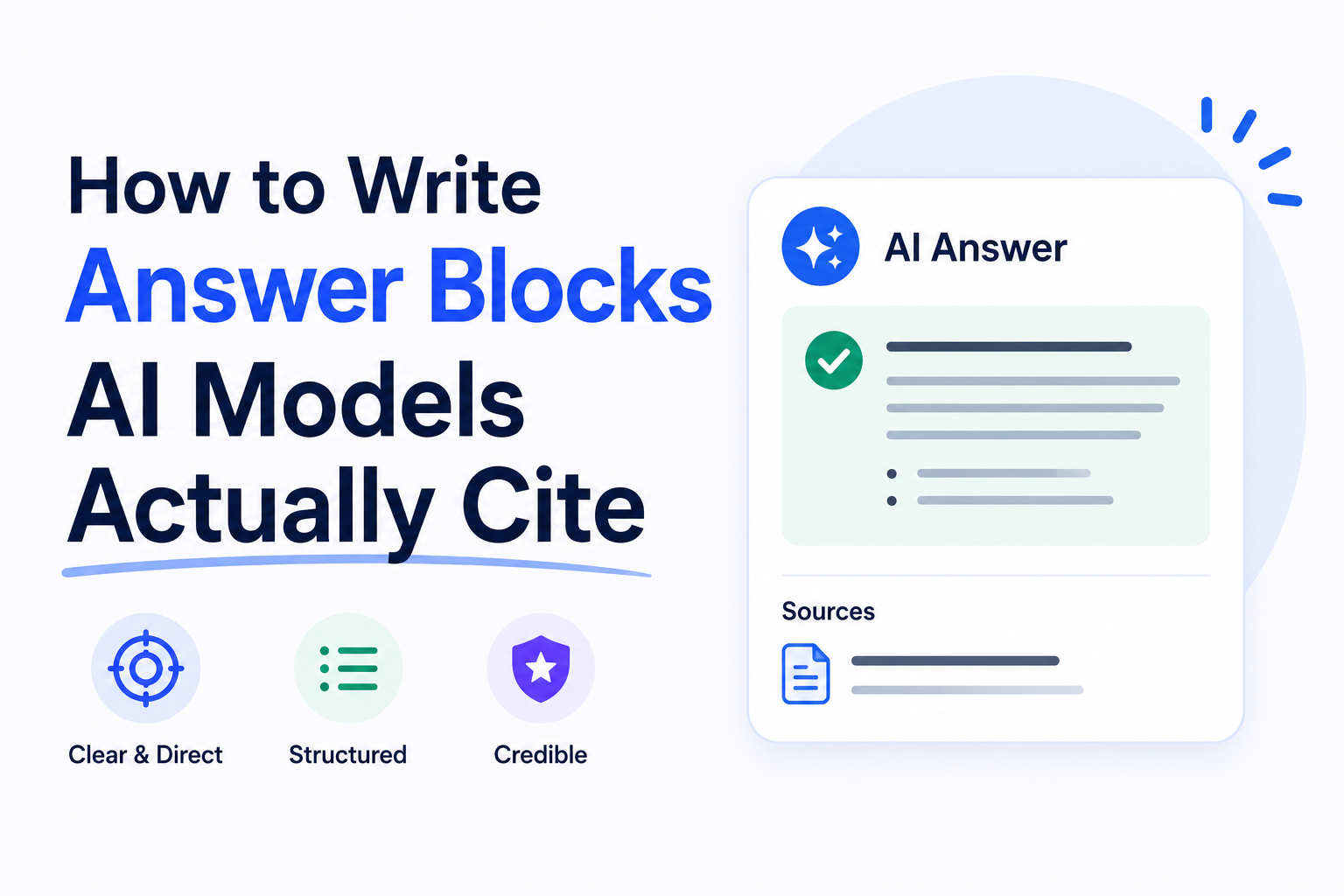
How to Write Answer Blocks AI Models Actually Cite
To write answer blocks AI models actually cite, make each block a concise, self-contained paragraph that answers a query in its first sentence. AI models scan your page hunting for a tight, extractable answer. If they don’t find one fast, they move on. This article shows you exactly how to build blocks that earn citations. What Makes an AI-Friendly Answer Block AI models look for four things when deciding what to cite: ...
Markdown vs. HTML for AI Crawlers: What Actually Gets Parsed
Introduction You publish content for two audiences now: humans and machines. Humans get your beautifully styled HTML with JavaScript interactivity, CSS layouts, and visual hierarchy. Machines—specifically large language models—get a mess. They don’t see your hero images. They don’t care about your hamburger menu. They parse text, and your HTML wraps that text in layers of structural noise that eats into limited context windows. Understanding what AI crawlers actually extract from your pages—and what they ignore—changes how you think about content delivery. This article breaks down the parsing gap between HTML and Markdown, shows you what gets lost in translation, and explains why plain text formats are quietly becoming the preferred handshake between website owners and AI systems. ...
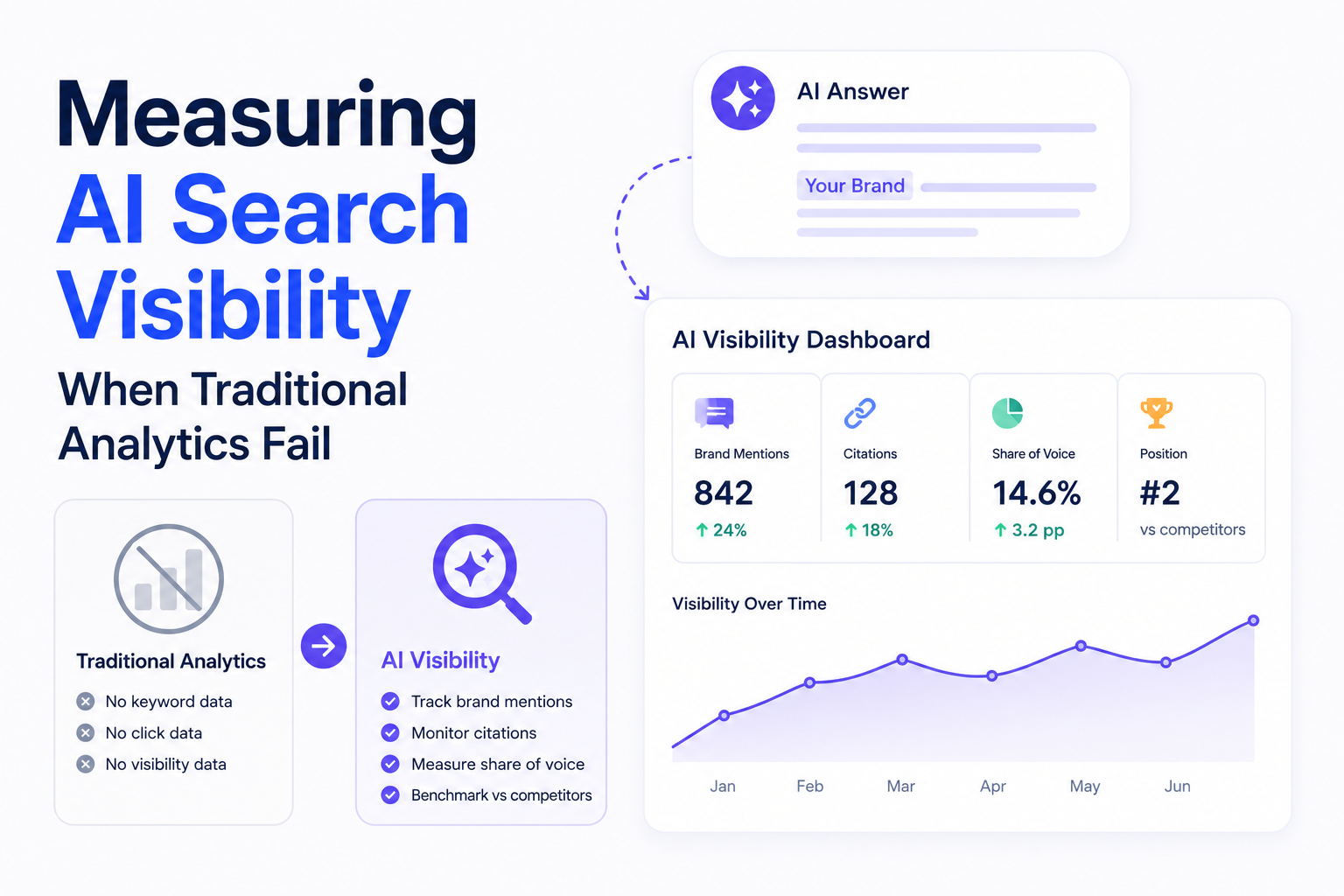
Measuring AI Search Visibility When Traditional Analytics Fail
Introduction You open Google Analytics. The numbers drop. Organic traffic slides month over month. But your content ranks fine. Your keywords hold position. What gives? The answer hides in plain sight. Users get answers without clicking. AI Overviews, ChatGPT, Perplexity, Claude—they scrape your content, synthesize it, and deliver answers directly. Zero clicks. Zero visits. Your analytics dashboard shows failure. Reality tells a different story. Traditional analytics tools measure clicks and pageviews. AI search visibility happens before the click—often without any click at all. You need new metrics, new methods, and a new mindset to track what matters now. ...
Structuring Content for Machine Extraction Without Killing Readability
Introduction You write for humans. But now machines read you too. AI models scrape your pages, pull answers, and feed them into ChatGPT, Claude, and Google AI Overviews. If your structure fails the machine, your content disappears—even if it’s brilliant. The tension is real. Optimize too hard for extraction and your prose turns robotic. Ignore extraction and AI overlooks you entirely. You need both readability and machine clarity in the same document. ...
The Citation Economy: Why Backlinks Still Matter in the Age of AI Search
Introduction You built your backlink profile for Google. Now AI scrapes the web differently. But here’s what most people miss: citations didn’t die. They evolved. The old link economy transformed into a citation economy. And backlinks still fuel it. AI models like ChatGPT, Claude, and Perplexity don’t crawl the web live the way Google does. They rely on training data. They rely on retrieval-augmented generation. They rely on signals that tell them which sources deserve trust. One of the loudest signals remains the same: who links to you. ...
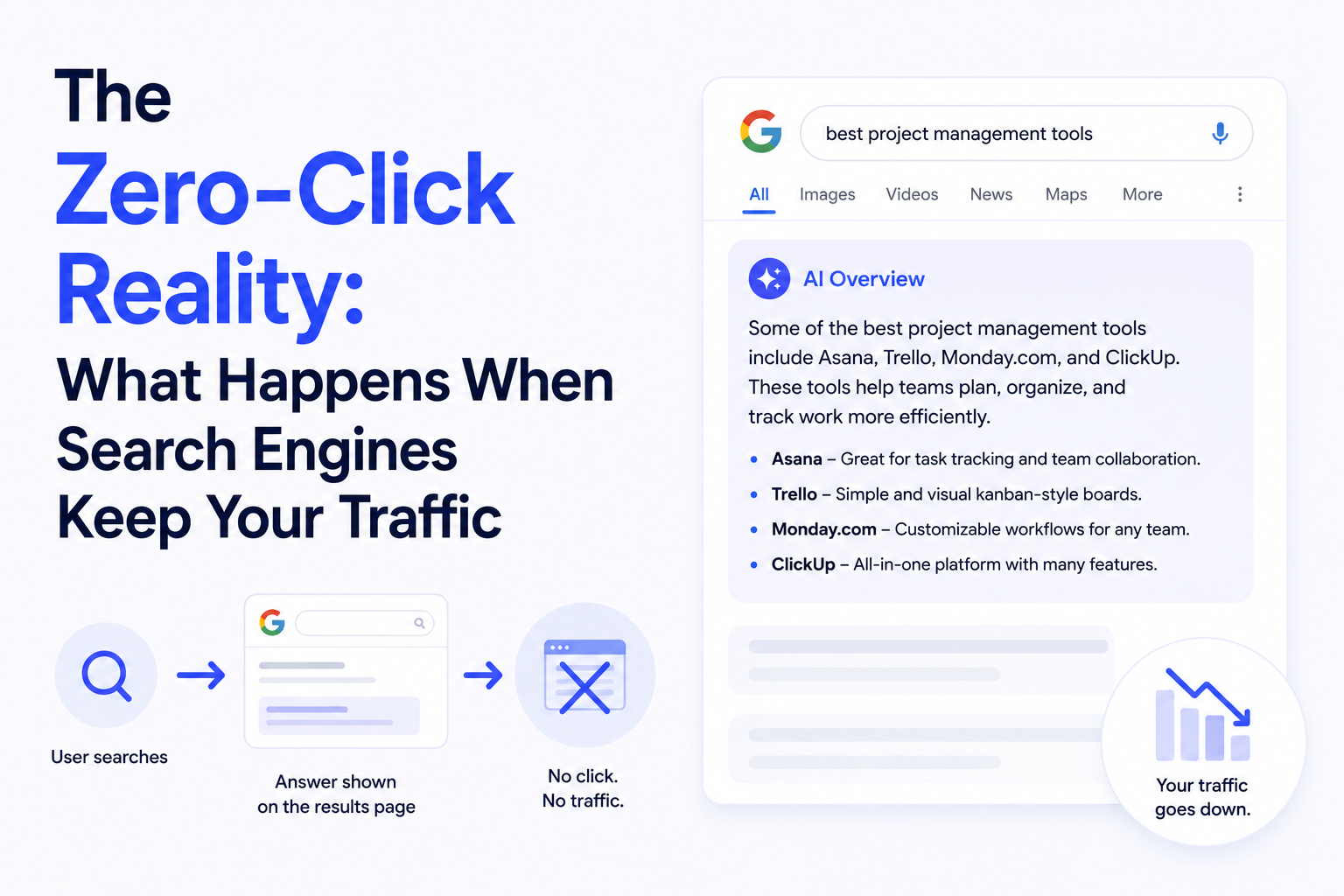
The Zero-Click Reality: What Happens When Search Engines Keep Your Traffic
Introduction You publish a perfect article. It ranks number one. Nobody clicks it. Welcome to the zero-click reality. Google keeps changing the deal. Users type a question and get the answer right on the search results page. No website visit required. 25% of all searches now end without a click. In some industries, that number crosses 50%. This isn’t a bug in the system. It’s the system working exactly as designed. And it changes everything about how you think about visibility, traffic, and content strategy. The old playbook said: rank high, get clicks. The new playbook says: get cited, get seen, even when nobody visits your site. ...